

The process of hair loss can create deep emotional distress for men who often experience gradual hair loss or sudden and persistent unexpected losses, creating tremendous disappointment, but Dutasteride may be your remedy! Many men share the experience of thinning hair at the crown and receding temples with decreased overall hair volume. Male pattern baldness, also known as androgenetic alopecia, affects hundreds of thousands of men globally. Medical science continues to develop through time, and Dutasteride for hair loss has become one of the leading hair loss treatments in current practice.
Dutasteride serves as an off-label hair loss treatment for men after its initial purpose was for the treatment of prostate enlargement. This article provides detailed information about Dutasteride by explaining its nature and mechanism, and detailing expected outcomes and reasons why this treatment could work for you.
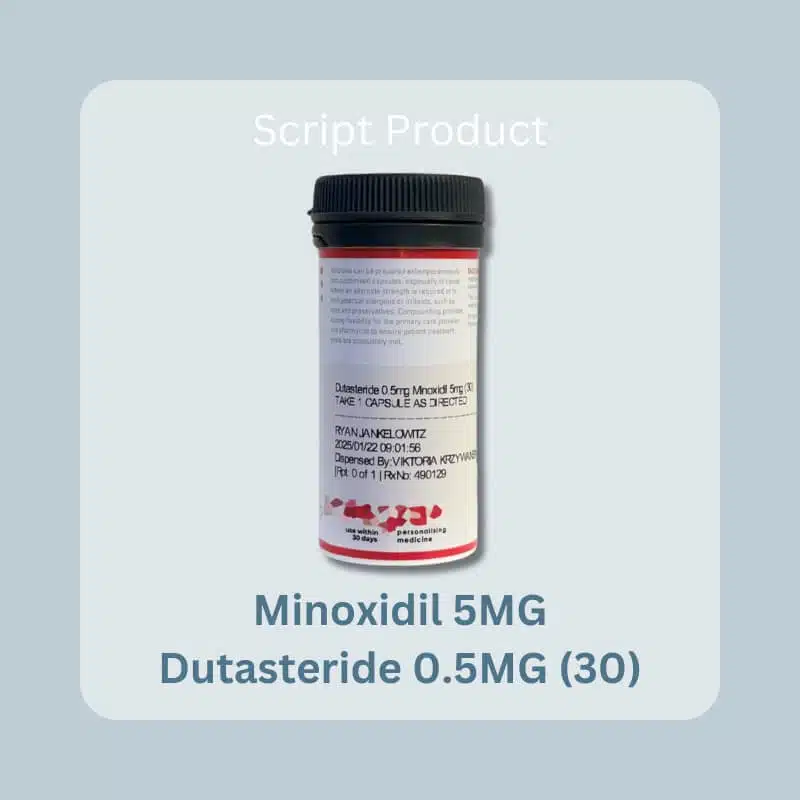
What is Dutasteride and how does it work for hair loss?
Dutasteride functions as an oral medication which belongs to the drug group of 5-alpha reductase inhibitors. The medications function by decreasing dihydrotestosterone (DHT) hormone levels, which causes hair follicle shrinkage in genetically predisposed men.
Dutasteride reduces DHT levels to a significant extent, which enables hair follicle miniaturisation to slow down and sometimes leads to restored, thicker hair growth.
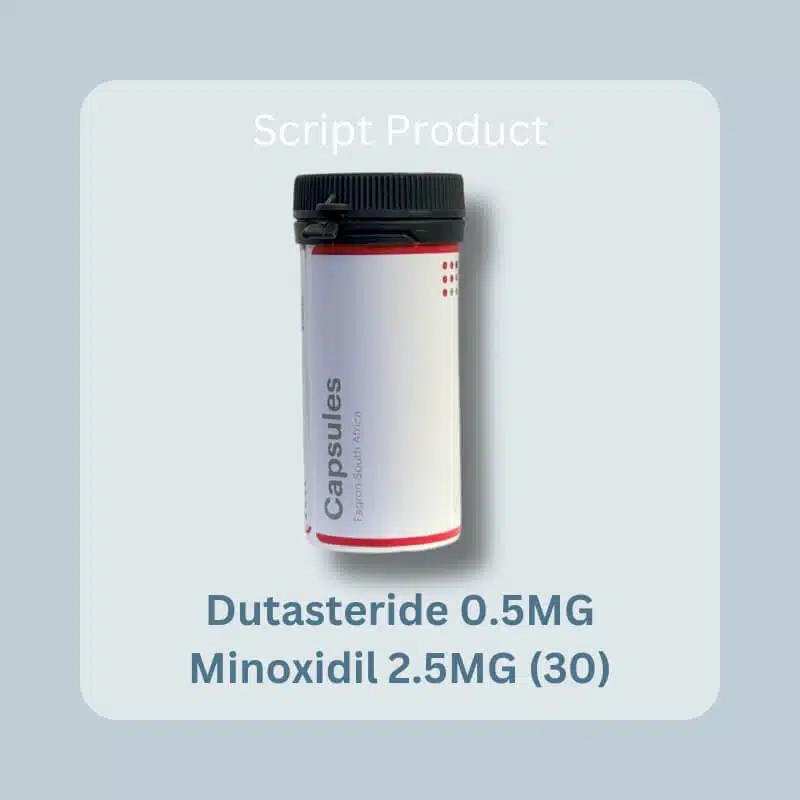
Dutasteride vs Finasteride
Finasteride has been the gold standard treatment for male pattern hair loss for many years. The drug functions by blocking Type II 5-alpha reductase that produces DHT. Dutasteride blocks both forms of the enzyme, Type I and Type II 5-alpha reductase, leading to greater DHT reduction with measurements reaching as high as 90% and beyond in specific cases.
Men who experience limited success with Finasteride medication may seek Dutasteride treatment because it produces better results. The extended half-life of Dutasteride allows it to remain active in the body for weeks, enabling better hormonal management. This treatment option serves as the preferred choice for patients who need strong and efficient methods to protect their hair while encouraging regrowth.

Expected Results and Timeline of Using Dutasteride for Hair Loss
Hair growth progresses at a gradual pace; therefore, one must exercise patience during this process. The following section explains what one can expect during the treatment period:
Months 1 – 3: Users may notice hair loss because their weak strands drop before new, healthier growth emerges. Temporary hair loss is normal.
Months 3 – 6: The hair loss stabilises and regrowth starts to appear, especially at the crown.
Months 6 – 12: These months lead to noticeable improvements in hair density, together with enhanced texture and increased thickness. The areas which used to appear bare are now starting to regain their hair density.
After 12 months: Full results typically develop with continued improvement in scalp coverage.
Consistency is crucial. Daily Dutasteride consumption preserves results as well as hormonal equilibrium in the body.
Safety and Side Effects of Dutasteride
All medications come with potential adverse effects that users need to be mindful of. The following side effects reported by patients include:
- Decreased libido
- Erectile dysfunction
- Reduced semen volume
- Breast tenderness
These adverse effects occur infrequently, and patients can recover from them by discontinuing the treatment. The majority (approximately 93%) of men experience no issues with Dutasteride when they receive medical guidance about its use. It’s also worth noting that the risk of side effects may not increase linearly with higher effectiveness. The application of Dutasteride at low doses enables some patients to minimise adverse effects.
Clinical Evidence: Study on Low-Dose Dutasteride (0.2 mg)
If you’re concerned about side effects but still want results, low-dose Dutasteride might offer the best of both worlds. Here’s a word-for-word extract from a respected clinical study examining its efficacy and safety:
Efficacy and Safety of Low-Dose (0.2 mg) Dutasteride for Male Androgenic Alopecia: A Multicenter, Randomised, Double-Blind, Placebo-Controlled, Parallel-Group Phase III Clinical Trial
Abstract
Background
Dutasteride, a 5-alpha reductase inhibitor, is prescribed for male androgenetic alopecia (AGA) in Korea and Japan. Despite its efficacy, its use is limited by its long half-life, potent dihydrotestosterone suppression, and adverse effects.
Objective
To investigate the efficacy and safety of 0.2 mg dutasteride for male AGA.
Methods
Patients with male AGA were randomised to receive 0.2 mg dutasteride, placebo, or 0.5 mg dutasteride (2:2:1) once daily for 24 weeks. Safety and efficacy endpoints were assessed.
Results
Overall, 139 men were analysed. At week 24, the change in hair count within the target area at the vertex from baseline was significantly higher in the 0.2 mg dutasteride group than in the placebo group (21.53 vs. 5.96, p=0.0072). Dutasteride (0.2 mg) treatment led to greater hair growth improvement, as assessed by investigators at week 24 (p=0.0096) and an independent panel at weeks 12 and 24 (p=0.0306, p=0.0001). For all efficacy endpoints, 0.2 mg dutasteride was as effective as 0.5 mg dutasteride. The incidence of adverse events was low and not statistically different between the 0.2 mg dutasteride and placebo groups. The limitation of this study is the limited number of participants.
Conclusion
Low-dose (0.2 mg) dutasteride for male AGA showed significant efficacy and a favourable safety profile.
Trial Registration
ClinicalTrials.gov Identifier: NCT04825561
Is Dutasteride Right for You?
Dutasteride may be a strong option if:
- You have moderate to advanced hair thinning or vertex balding
- Finasteride has delivered limited results
- You’re looking for maximum DHT suppression
- You’re under medical supervision and want a clinically supported option
However, it’s essential to consult with a qualified hair restoration specialist, such as the doctors at Medical Hair Restoration, to ensure that the treatment aligns with your health profile and long-term goals.
Take the Next Step in Your Hair Restoration Journey
Dutasteride could be the key to regaining your confidence and restoring the hair you thought was lost forever. If you’re ready to explore whether Dutasteride should be part of your treatment plan, our team is here to help.
Contact the doctors at Medical Hair Restoration to schedule a consultation and discuss Dutasteride for hair loss and your personalised approach to hair restoration.
Disclaimer: This content is for informational purposes only and does not constitute medical advice. Please consult your doctor before starting any medication. Dutasteride is strictly for men.
